
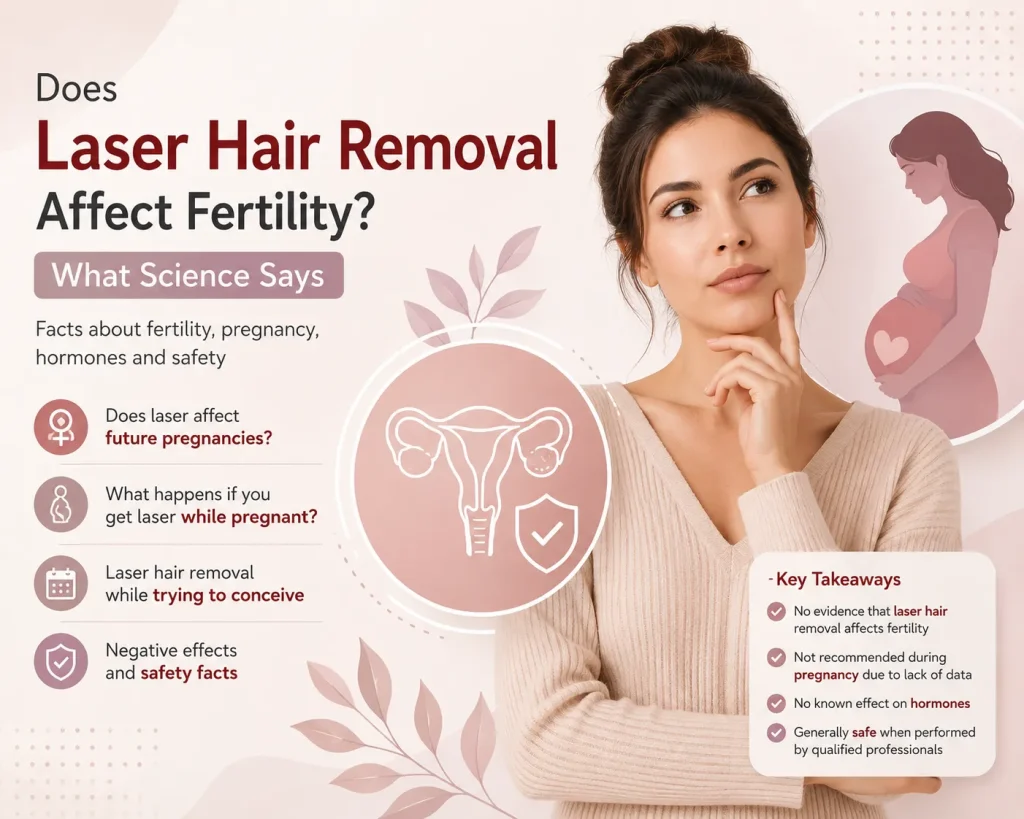
Many people considering laser hair removal have the same concern: Does laser hair removal affect fertility? This question becomes especially important when treatment involves the bikini area or when someone is planning a pregnancy.
Does Laser Hair Removal Affect Fertility?
No evidence currently shows that laser hair removal affects fertility in females or males. Laser hair removal works by targeting pigment in the hair and delivering energy to the hair follicle in the skin. It does not intentionally target the ovaries, uterus, testes, or other reproductive organs, and laser hair removal is not known to cause infertility or alter reproductive function.
However, laser hair removal during pregnancy is generally postponed because there is limited research specifically evaluating cosmetic hair-removal lasers in pregnant people. This is different from saying that laser hair removal causes infertility or harms future fertility.
Table of Contents
How Does Laser Hair Removal Work?
Understanding how laser hair removal works can help explain why people ask whether it could affect fertility.
Laser hair removal uses light energy that is absorbed primarily by melanin, the pigment that gives hair its colour. This energy heats and damages structures associated with the hair follicle, helping reduce future hair growth.
The treatment is designed to act locally at the treatment area. Different laser wavelengths and settings are selected according to factors such as skin colour and hair characteristics. Professional guidelines also emphasize that the type of laser and treatment settings matter, particularly for darker skin types.
In other words, a laser treatment for unwanted hair is not designed to travel through the body and reach reproductive organs.
Best Laser for Acne Scars and Hyperpigmentation: Why Discovery Pico Stands Out
Does Laser Hair Removal Affect Fertility in Females?
There is no established evidence that laser hair removal affects female fertility.
People are often particularly concerned about laser hair removal on the bikini line because the ovaries and uterus are nearby. However, the laser used for hair removal acts on the skin and hair follicles in the treatment area rather than targeting internal reproductive organs.
Laser and light therapies are also recognized in the international PCOS guideline as options for reducing unwanted facial hair in women with PCOS. The guideline recommends treatment by experienced and suitably qualified providers and notes that adverse effects appear limited when treatment is appropriately performed.
Does bikini laser hair removal affect the ovaries?
There is no evidence that cosmetic laser hair removal of the bikini area damages the ovaries.
The purpose of the treatment is hair reduction at the skin level. The ovaries are internal reproductive organs and are not the treatment target.
That said, the exact device, wavelength, treatment settings, skin type and experience of the provider all matter for skin safety and treatment results.
Ultraformer Before and After: What Results Can You Really Expect?
Can Laser Hair Removal Cause Infertility in Women?
Laser hair removal is not known to cause infertility in women.
There is an important difference between:
- a treatment affecting hair follicles
- a treatment affecting reproductive organs
- a treatment changing fertility
- a treatment being studied for use during pregnancy
These are not the same thing.
Current evidence and guidance do not establish cosmetic laser hair removal as a cause of infertility. The lack of recommendation for laser hair removal during pregnancy is primarily related to limited pregnancy-specific safety data, not evidence that laser hair removal causes infertility before pregnancy.
Is Ultraformer Better Than Botox? A Doctor’s Honest Comparison
Does Laser Hair Removal Affect Fertility in Males?
There is no established evidence that laser hair removal causes male infertility.
Laser hair removal may be performed on areas such as the chest, back, abdomen or other body areas, but the treatment is designed to target hair follicles in the skin.
Male fertility depends on multiple factors, including sperm production and function, hormones, genetics, certain medical conditions, medications and lifestyle factors. Cosmetic laser hair removal is not established as a cause of impaired sperm production or male infertility.
For treatment around sensitive areas, choosing a qualified provider and discussing the treatment area beforehand is important.
How Long Does Laser Hair Removal Affect Fertility?
There is no known period during which laser hair removal reduces fertility.
In fact, current evidence does not establish that laser hair removal affects fertility in the first place.
So there is no evidence-based answer such as:
- one month
- three months
- six months
because there is no recognized “fertility recovery period” after laser hair removal.
This is different from treatments or medications that can temporarily affect reproductive function and may require a waiting period before pregnancy. Laser hair removal is not currently known to belong to that category.
Discovery Pico vs PicoSure: A Dermatologist’s Complete Comparison Guide
Does Laser Hair Removal Affect Hormones?
Laser hair removal does not appear to change your reproductive hormones or treat the hormonal cause of excessive hair growth.
This distinction is particularly important for people with:
- PCOS
- hirsutism
- elevated androgen levels
- other hormonal causes of excessive hair growth
Laser hair removal can reduce unwanted hair, but it does not correct the underlying hormonal condition causing the hair growth.
For example, someone with PCOS may achieve hair reduction with laser treatment but still have hormonal influences that affect future hair growth. The international PCOS guideline notes that women with PCOS may require more laser sessions than women with idiopathic hirsutism to achieve hair reduction.
Can laser hair removal affect estrogen or testosterone?
There is no established evidence that cosmetic laser hair removal changes estrogen or testosterone levels.
The laser is used to target hair follicles. It is not a hormonal treatment.
If you notice significant changes in hair growth, menstrual cycles, acne or other symptoms of hormonal imbalance, it is important to investigate the underlying cause rather than assuming laser treatment caused the hormonal changes.
Laser Hair Removal While Trying to Conceive: Is It Safe?
Many people search for “laser hair removal while trying to conceive” because they are unsure whether they should stop treatment before pregnancy.
If you are trying to conceive but are not pregnant, laser hair removal is a different situation from receiving treatment during a confirmed pregnancy. However, because pregnancy can occur before it is recognized, it is sensible to tell your treatment provider that you are trying to conceive.
Your provider can discuss:
- the treatment area
- the type of laser being used
- your treatment schedule
- the possibility of an unrecognized early pregnancy
- when to stop or postpone future sessions
If you think you may already be pregnant, inform your provider before proceeding.
Does Laser Affect Future Pregnancies?
There is no evidence that laser hair removal before pregnancy damages a future pregnancy or reduces your ability to become pregnant later.
This is one of the most important distinctions in the discussion.
Laser hair removal before pregnancy
There is no established evidence that having laser hair removal before becoming pregnant harms a future pregnancy or causes infertility.
Laser hair removal during pregnancy
This is different. There are limited studies specifically evaluating the safety of cosmetic hair-removal lasers during pregnancy, which is why many healthcare professionals recommend postponing treatment once pregnancy is known. ACOG notes that there are no studies on laser hair removal during pregnancy and that pregnancy can make the skin more sensitive to burns and scarring.
Not recommended during pregnancy does not mean proven to cause infertility.
What Happens If You Accidentally Get Laser Hair Removal While Pregnant?
If you accidentally had laser hair removal while pregnant, especially before you knew you were pregnant, do not panic.
The first step is to avoid further cosmetic laser sessions until you have discussed the situation with your obstetrician, midwife or healthcare provider.
There is limited research specifically evaluating hair-removal lasers during pregnancy, and this lack of data is one reason treatment is commonly postponed. However, limited evidence is not the same as evidence that one accidental treatment will cause harm. A systematic review noted that there were no data available specifically on the safety of hair-removal lasers during pregnancy and that cosmetic hair-removal procedures are generally not recommended during pregnancy because of this evidence gap.
What should you do?
- Do not panic or assume that harm has occurred.
- Do not schedule additional laser hair removal sessions while pregnant without medical advice.
- Tell your obstetrician or healthcare provider about the treatment.
- Provide details if possible, including the treatment date, body area and type of treatment.
Your healthcare provider can give advice based on your individual pregnancy and medical history.
I Had Laser Hair Removal While Pregnant in the First Trimester. What Should I Do?
Discovering that you were pregnant after having a cosmetic treatment can understandably cause anxiety.
If you had laser hair removal while pregnant in the first trimester before knowing you were pregnant, contact your obstetrician or healthcare provider and explain what happened.
It is important to remember that cosmetic hair-removal laser treatments are usually postponed during pregnancy primarily because pregnancy-specific safety data are limited. Current evidence does not establish that accidental exposure causes infertility or proves that a single treatment causes harm to a pregnancy.
Do not continue treatment until you have received appropriate medical advice.
Why Is Laser Hair Removal Usually Avoided During Pregnancy?
There are several reasons providers may recommend postponing laser hair removal during pregnancy.
1. Limited Pregnancy-Specific Research
There are no robust studies specifically designed to establish the safety of cosmetic laser hair removal during pregnancy.
2. Pregnancy Can Change the Skin
Hormonal changes during pregnancy can affect the skin and hair growth. ACOG notes that pregnancy hormones can make body hair grow or become thicker.
3. Increased Skin Sensitivity
ACOG also notes that the skin can be more sensitive to burns and scarring during pregnancy, which may affect the risk-benefit decision for an elective cosmetic procedure.
4. Results May Be Less Predictable
Hormonal changes can influence hair growth patterns, potentially making cosmetic hair-reduction results less predictable during pregnancy.
For these reasons, postponing elective laser hair removal until after pregnancy is often the cautious approach.
What Are the Negative Effects of Laser Hair Removal?
Laser hair removal is generally considered safe when performed appropriately, but like any procedure, it can cause side effects.
The most common negative effects of laser hair removal are usually temporary and include:
- discomfort during or after treatment
- redness
- swelling around the treated hair follicles
According to the American Academy of Dermatology, these common side effects generally last around one to three days.
Less common complications can include:
- blistering
- skin infection
- scarring
- temporary or, more rarely, persistent skin lightening or darkening
- cold sore outbreaks in susceptible people when relevant facial areas are treated
The risk of complications can depend on the device, settings, skin type, treatment area and provider expertise.
Can Laser Hair Removal Cause Burns?
Yes, burns can occur, although they are not an expected outcome of properly performed treatment.
The risk may increase when:
- inappropriate settings are used
- the device is unsuitable for the person’s skin type
- treatment is performed by an inexperienced provider
- proper cooling or safety procedures are not used
- the skin has recently been exposed to significant sun or tanning
This is why professional assessment and appropriate laser selection matter. Guidelines recommend considering skin and hair characteristics when choosing the wavelength and treatment approach.
Does Laser Hair Removal Cause Cancer?
There is no established evidence that cosmetic laser hair removal causes cancer.
Laser hair removal uses non-ionizing light energy to target hair pigment. This differs from ionizing radiation, which has enough energy to remove electrons from atoms and can damage DNA in different ways.
However, laser treatment should still be performed responsibly. Any unusual skin lesion or mole should be assessed appropriately rather than simply treated as unwanted hair.
Is Pico Laser Safe During Pregnancy?
Is Laser Hair Removal Safe for People With PCOS?
Laser hair removal can be an important option for people with PCOS who experience unwanted hair growth.
The 2023 international evidence-based PCOS guideline states that mechanical laser and light therapies should be considered for reducing facial hirsutism and related impacts on quality of life. It also notes that women with PCOS may need more treatment sessions than women with idiopathic hirsutism.
However, laser hair removal does not cure PCOS or directly correct the hormonal imbalance associated with the condition.
A comprehensive approach may include evaluating the underlying hormonal and medical factors when appropriate.
Is Laser Hair Removal Safe for All Skin Types?
Laser hair removal can be performed across different skin types, but the device and settings need to be selected carefully.
There is no single laser that is automatically best for everyone.
The choice may depend on:
- skin tone
- hair colour
- hair thickness
- treatment area
- tendency to develop hyperpigmentation
- history of burns or skin reactions
- medications and medical conditions
The Endocrine Society recommends considering longer-wavelength light sources such as appropriately delivered Nd:YAG or diode lasers for women of colour undergoing photoepilation, with appropriate cooling and individualized treatment.
How Can You Make Laser Hair Removal Safer
Before treatment, ask about:
The device
What type of laser is being used, and why is it suitable for your skin and hair?
The provider’s experience
Experience and appropriate training are important for both safety and results.
Your medical history
Tell your provider about:
- pregnancy or the possibility of pregnancy
- medications
- previous skin reactions
- pigmentation problems
- history of scarring
- hormonal conditions such as PCOS
Your skin
Avoid hiding information about recent tanning, sun exposure or previous reactions to laser treatments.
The PCOS guideline specifically recommends seeking hair-reduction therapies from experienced and suitably qualified providers.
Does Laser Hair Removal Affect Fertility? The Bottom Line
No evidence currently shows that laser hair removal causes infertility in females or males. The treatment is designed to target hair follicles in the skin and is not known to damage reproductive organs, alter fertility or create a known period of reduced fertility.
The main point of caution relates to pregnancy. Because high-quality research specifically evaluating cosmetic hair-removal lasers during pregnancy is limited, laser hair removal is commonly postponed once pregnancy is known. This should not be confused with evidence that laser hair removal before pregnancy affects fertility or future pregnancies.
If you are trying to conceive, think you may be pregnant or accidentally had laser hair removal before discovering a pregnancy, speak with your healthcare provider for advice based on your individual situation.
FAQs About Laser Hair Removal and Fertility
Does laser hair removal affect fertility in females?
There is no established evidence that laser hair removal causes female infertility or damages the ovaries or uterus.
Does laser hair removal affect fertility in males?
There is no established evidence that properly performed cosmetic laser hair removal causes male infertility.
How long does laser hair removal affect fertility?
There is no known period during which laser hair removal reduces fertility because it is not established as a cause of impaired fertility.
Does laser hair removal affect hormones?
Laser hair removal is not a hormonal treatment and does not correct the underlying hormonal cause of excessive hair growth.
Does laser affect future pregnancies?
There is no evidence that laser hair removal before pregnancy damages a future pregnancy.
Can I have laser hair removal while trying to conceive?
If pregnancy is possible, tell your treatment provider that you are trying to conceive. If you suspect you may already be pregnant, postpone treatment and seek advice before continuing.
What happens if you accidentally get laser hair removal while pregnant?
Do not panic. Stop further sessions and inform your obstetrician or healthcare provider. Cosmetic laser hair removal is generally postponed during pregnancy because pregnancy-specific safety data are limited.
What are the negative effects of laser hair removal?
Common temporary side effects include redness, swelling and discomfort. Less common complications can include blistering, infection, scarring and changes in skin pigmentation.
Ready to Choose the Right Laser Hair Removal Technology?
The right laser hair removal treatment depends on much more than simply choosing a device. Skin type, hair characteristics, treatment area and appropriate laser technology all play a role in achieving effective results while prioritizing safety.
Explore Emkanat’s advanced aesthetic laser technologies and find the right solution for your clinic and patients.